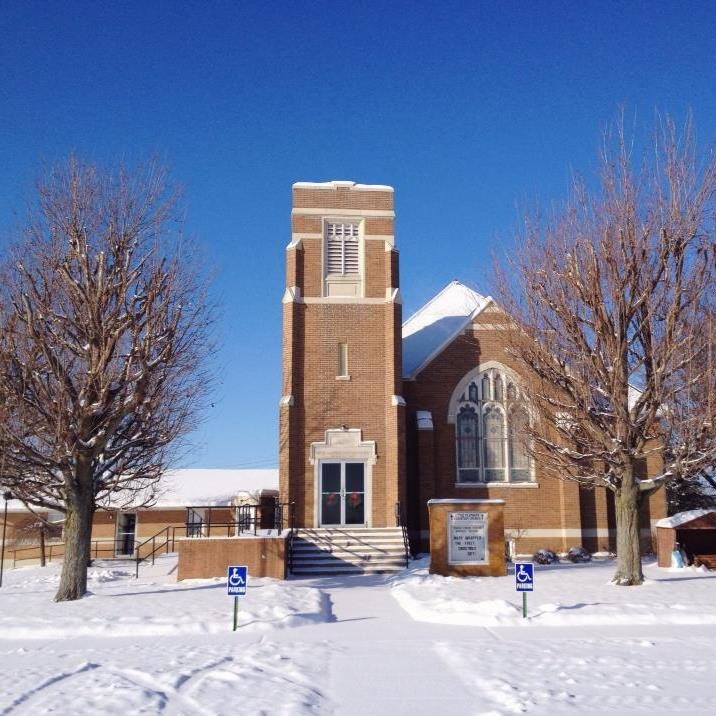

Advent Joy

From the Bible Project:

Joy

We often think about joy as an experience of happiness based on favorable circumstances: a stroke of good luck, a personal achievement, or a long-held desire finally being satisfied. But when joy depends on circumstances, it fades fast when the good times end. 

Advent joy is not about general happiness stemming from good times. It’s a deep sense of safety and freedom people feel because of God’s loving character, which remains constant through all circumstances, and because God can be trusted to ultimately bless and heal creation as he promised. Similar to the joy a friend’s presence brings on good days and bad, we experience joy as God walks with us through the fluctuations of life’s positive and painful circumstances. 

In the Bible, people express joy both when God delivers them from situations of oppression and while still in the middle of exile, persecution, and pain. As people remember God’s loving, rescuing actions throughout history, they wait in joyful hope for him to act in the future, even when that waiting requires patient suffering. 

This kind of joy is about being united with the God who walks with us and trusting that he will one day wipe away every tear. It looks to the future but also takes root in our present reality. The season of Advent invites us to experience joy not because everything is perfect but because God is with us and his joy is already breaking into the world.

For more like this visit The Bible Project: Advent

Salutation by Luci Shaw

Luke 1:39-45

Photo by Pixabay on Pexels.com

Framed in light,

Mary sings through the doorway.

Elizabeth’s six-month joy

jumps, a palpable greeting,

a hidden first encounter

between son and Son.

And my heart turns over

when I meet Jesus

in you.

Recognizing Genius

Photo by Johannes Plenio on Pexels.com

Inventor Nikola Tesla, whose discoveries led to alternating current, was born in 1856 during a lightning storm. According to legend, a frightened midwife declared, “This child will be a child of darkness!” But Tesla’s mother replied, “No, he will be a child of light.”

As an adult, Tesla reportedly stood to applaud God whenever the skies opened. In Please, Sorry, Thanks, Mark Batterson writes, “Every time lightning struck and thunder clapped, it was one genius giving a standing ovation to another Genius.”

Every day, about 3.46 million lightning strikes occur on our planet. “That is a lot of standing ovations,” Batterson writes, “but according to the psalmist, the angels shout ‘Encore’ after each one!” (Psalm 29). He asks, “When was the last time you clapped for the Creator? When was the last time you gave Him a standing ovation?”

The month of November is a terrific time to start clapping for our wise, good God. Give Him daily thanks for His wonders and blessings!

Holy Interruptions

Photo by Alex Kovshovik on Pexels.com

Most of us are pretty good at planning—schedules, to-do lists, calendars filled to the brim. But what happens when God steps in with an unexpected detour?

Throughout Scripture, God often moved in the interruptions. Moses was tending sheep when he saw a burning bush. Mary was simply living her life when an angel appeared. Even Jesus was frequently “interrupted” by people seeking healing or hope—and He never turned them away.

“Interruptible faith” is a posture of openness. It’s saying, “Lord, here’s my plan—but I trust Yours more.” It means slowing down, paying attention, and being willing to let God rearrange our day for His greater purpose.

Proverbs 16:9 (NIV) reminds us, “In their hearts humans plan their course, but the Lord establishes their steps.” May we have the courage to let Him.

More than Reading, ’Riting and ’Rithmetic

You may recall that many followers of Jesus called him “Rabbi.” In essence, the word means teacher. Clearly the word describes the brilliant Nazarene who was constantly teaching his listeners about God and God’s expectations of humans.

Photo by Thirdman on Pexels.com

In a secular society, it is of paramount importance that the teachings of Christ be proclaimed and affirmed wherever possible. In the early days of our country, it was customary for public schools to teach reading, writing and arithmetic as well as Christian principles. Subjects being taught were presented in a setting of morality, religion and character development.

The reading book compiled by William H. McGuffey in 1836 focused on such themes as self-denial, temperance, obedience, and warned against laziness, profanity, stealing and vanity.

In our time, however, when it is difficult to focus on God and spiritual matters in public schools, our churches and families have a great responsibility. Sunday school attendance, not only for children but for adults as well, must be of primary importance. Prayer, as well as discussion of social issues from a Christian point of view, must be practiced in the home and church. We must learn and teach about Christ.

“Learn from me,” Jesus said. “Take my yoke upon you, and learn from me; for I am gentle and humble in heart, and you will find rest for your souls” (Matthew 11:29 NRSV). Where shall we learn of him or from him if not in our churches and homes?

Pressed

Gethsemane, the name of the place where Jesus prayed before his betrayal, is an Aramaic word for “olive press.” During Bible times, olives were pressed three times to remove all the valuable oil. Before being arrested in the Garden of Gethsemane, Jesus felt the full pressing weight of our sins on his shoulders. Surrounded by olive trees, praying fervently while sweating drops of blood, the perfect Son of God asked his heavenly Father three times to remove the cup of suffering.

Instead of removing that trial, God used it to redeem and save humankind. Likewise, God uses our hardships to refine and strengthen our faith.

In The Rock, the Road and the Rabbi, TV host Kathie Lee Gifford and Messianic Rabbi Jason Sobel speculate that if Peter, along with James and John, hadn’t fallen asleep in Gethsemane, he may have had the strength to not deny Jesus later that night.

“All of us must be vigilant to watch and pray so that we don’t succumb to the temptation to deny the Lord when we go through the olive presses of life and feel like we are being crushed by our situation and circumstances,” the authors write. “We must remember that it is the crushing that brings out the true inner value and worth of the olive.”

Binding Us to God: The Lenten Season

During the Lenten season, which begins on Ash Wednesday (March 5 this year), Christians figuratively follow Jesus into the desert. Just as our Savior spent 40 days fasting and facing temptation, we focus on self-reflection and contrition.

In an 1873 hymn, Claudia Hernaman wrote, “O Lord, throughout these forty days, you prayed and kept the fast. Inspire repentance for our sin, and free us from our past.”

The desert experience of Lent serves a clear purpose, filling us up rather than depleting us. “This is what Lent is meant to be,” writes theologian Ron Rolheiser. “Time in the desert to courageously face the chaos and the demons within us and to let God do battle with them through us. The result is that we are purified, made ready, so the intoxicating joy of Easter might then bind us more closely to God and each other.”

Lenten Resources:

From the Pastor’s Pen: The Big and Little Picture

Too often at Christmastime, we get so consumed with gift-giving and gift-getting that the Gift of all Gifts gets somewhat ignored and unfortunately forgotten. The Apostle Paul had these words to say about this gift that was given to everyone, but also given to just YOU:

“Thanks be to God for His indescribable gift” 2 Corinthians 9:15

We as Christians understand that theReason for the Season” is NOT what we are giving or getting on December 25.  It is also NOT all the gatherings and parties we attend or even our enthusiastic participation in an “ugly sweater” contest (Now that’s INDESCRIBABLE).

These are possibly a few of the many festivities you and I claim as part of our traditions. But they are only a partof thewhole that constitutes our reasons within the season (the littlepicture).  It is part of our actuality and obviously part of our reality as we attempt to seek Christ “as we are going”within our daily lives on this earth.  This is an example of what The Story curriculum (a study that LFCC began in January 2015 – yes, it’s been ten years) calls the Lower Story. The following material is taken from a companion book entitled The Heart of the Story:

“This is Lower Story stuff… We need to eat.  Pay the bills.  Avoid the little voice that says, ‘Go ahead do what feels good. No one will ever know.’  These are the groanings of daily life, the raw clay God used to shape us as vessels on His potter’s wheel.  So we cry out to God to meet us in our Lower Story, and He does.  Not always according to our liking, but He is intimately involved and cares deeply about details of our daily lives. He empowers us to live the Lower Story from an Upper Story perspective.  Everything that happens to us in the Lower Story, whether good or bad, will work out for our good if we align our lives to His superior calling.”

God IS concerned with us as individuals.  Remember, Jesus would have come to this earth to die for just you or just me if we were the only ones needing His Saving Grace!  By the way, that isthe Upper Story within the Nativity narrative (the BIG picture).  We find this stated precisely and emphatically in the third gospel.  It helps us see how our little pictures are incorporated into God’s BIG picture.  Just like some common ordinary shepherds who heard these words:

“Do not be afraid.  I bring you good news of great joy that will be for all the people.  Today in the town of David a Savior has been born to YOU; He is Christ the Lord.”(Luke 2:10-11)

Sincerely Seeking CHRIST in CHRISTmas,

Pastor Pat

Kingfisher Faith

In a video on his publisher’s website, Eugene Peterson tells of watching a kingfisher repeatedly dive for fish in a lake. Peterson counted 37 dives before the kingfisher caught its supper! “And he’s the king fisher!” Peterson chuckles. From that bird-watching episode, he gleaned a ministry lesson: It may take a long time and many attempts — maybe dozens! — before something works out.

God calls us to live out his love faithfully, even when we don’t seem to be accomplishing anything. Maybe we extend 36 invitations to worship, work 36 monthly shifts at a food bank or utter 36 prayers without seeing results. “What’s the point?” we wonder. But the kingfisher urges us on: “Maybe number 37 is the charm!”

In the words of St. Paul (and mixing fishing and farming metaphors): “Let us not become weary in doing good, for at the proper time we will reap a harvest if we do not give up” (Galatians 6:9, NIV).